


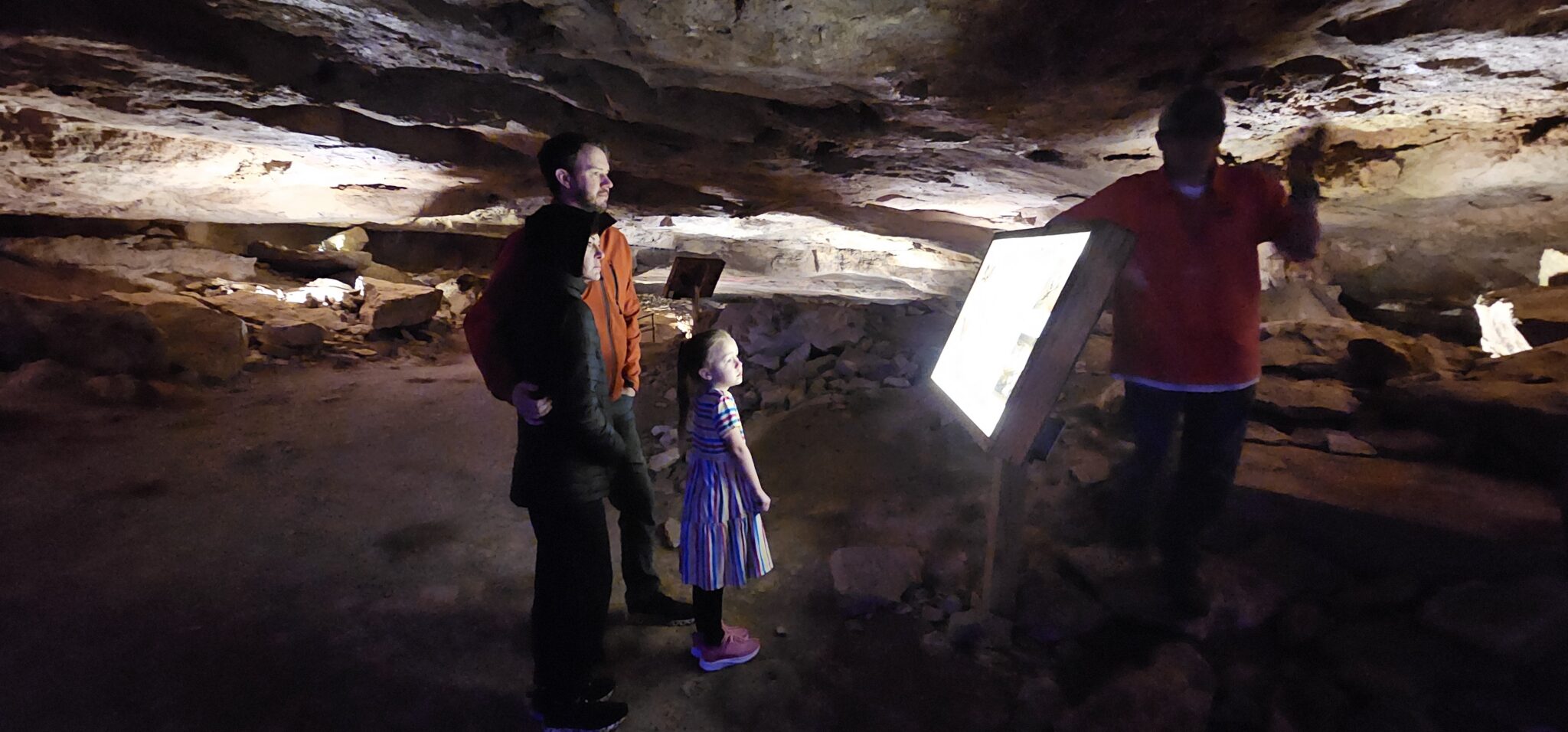
Celebrate National Cave and Karst Day on June 6 at Historic Cumberland Caverns
Every year on June 6, conservationists, scientists, and explorers mark National Cave and Karst Day, a moment to spotlight one of the most overlooked yet essential natural systems on Earth. Caves may feel like destinations for adventure, but their real value runs much deeper: they underpin water systems, sustain rare biodiversity, and provide a living record of environmental change stretching back millions of years.
At Historic Cumberland Caverns (Historic Cumberland Caverns), that reality isn’t just acknowledged. It’s actively protected and shared with every visitor who steps underground.
What Is a Karst Landscape and Why Should You Care?
National Cave and Karst Day was established to raise awareness about karst terrain: regions formed when slightly acidic water slowly dissolves soluble rock like limestone over thousands of years, carving out caves, sinkholes, springs, and intricate underground rivers.
These aren’t just geological curiosities. According to the National Speleological Society and the U.S. Geological Survey, karst systems supply drinking water to roughly 25% of the global population and act as natural filtration networks, support rare and fragile ecosystems found nowhere else on Earth, and provide irreplaceable data for climate and environmental research.
The challenge is that they’re also extremely vulnerable. Pollution, overdevelopment, and sheer lack of public awareness can damage these systems quickly and sometimes permanently. Once a cave formation is broken or an aquifer is contaminated, the loss is measured in geological time, not human lifespans.
Tennessee’s Responsibility and Historic Cumberland Caverns’s Role in It
 Tennessee is one of the most cave-rich states in the country, home to more than 12,000 documented cave entrances. That abundance carries an outsized responsibility.
Cave systems don’t operate in isolation. What happens above ground, including development patterns, agricultural runoff, and even litter left near sinkholes, flows directly into what happens below. That’s why modern cave stewardship has evolved well beyond “don’t touch the formations.” It now demands active conservation, community education, and long-term thinking about the land as a connected system.
Historic Cumberland Caverns sits at the center of that responsibility for Middle Tennessee. As a National Natural Landmark, the cave is recognized not just for its geological significance, but for the standard of care that recognition demands.
How Historic Cumberland Caverns Balances Access and Protection
Most conservation challenges boil down to a tension: how do you protect something by letting people experience it? Historic Cumberland Caverns has spent decades working through that question.
 Rather than treating the cave as a passive attraction, Historic Cumberland Caverns approaches it as a living system that requires intentional care. That shows up in tangible ways: guided tours with controlled group sizes to minimize environmental impact, ongoing monitoring of formations and microclimates, education-first tour experiences that explain not just what visitors are seeing but why it matters, and behind-the-scenes practices designed to protect what guests never get close enough to touch.
The result is that every visit becomes something more than entertainment. It becomes awareness, and awareness, over time, becomes advocacy.
Making the Invisible Visible
One of the most effective conservation strategies is surprisingly simple: help people understand what they’re actually looking at.
Without context, a cave is just rock and darkness. With context, it becomes a natural archive of geological history spanning hundreds of millions of years, a sensitive indicator of water quality and environmental health, a habitat for species from cave crickets to rare salamanders found nowhere else on the planet, and a window into how water moves through the landscape long before it reaches a tap.
Historic Cumberland Caverns leans into this educational role. Tours are designed not to overwhelm visitors with science, but to make the connection between the underground world and everyday life feel tangible and personal. When someone understands that the water flowing through this cave system may one day flow from their faucet, conservation stops being abstract.
Leadership That Shapes the Mission
None of this happens by accident. It requires leadership with both scientific credibility and a genuine commitment to the long game.
In Nicole’s Words: What This Day Means on the Ground
Nicole Ridlen, General Manager at Historic Cumberland Caverns, is widely respected in the caving and conservation community. Her approach reflects a broader shift in how cave sites are managed, not as static attractions frozen in time, but as dynamic, protected resources with real environmental stakes. Her influence shapes everything from how tours are structured to how Historic Cumberland Caverns engages with the broader conservation community.
“National Cave & Karst day is a time we can celebrate these amazing, natural spaces with the world! While we celebrate every day, we understand not everyone thinks about caves 24/7/365! This gives everyone an opportunity to learn more about this underground world they live on top of! I started out as a caver by hobby, then changed my career path to focus on geology after completing a business degree. My whole life’s mission is to help caves be respected and understood spaces. At first it was in academia through research, but now it is in outreach by running a tour cave. Cumberland Caverns is an amazing example of a cave system, and the perfect stage for guests to learn about caves and karst.
I wish more people understood how interconnected the world truly is. What we do on the surface matters, and what happens in these underground spaces impacts us. From our drinking water to pest control to ecological balance, everyone feels the impacts of damage to cave and karst environments.”
Conservation You Don’t See
The work that matters most at Historic Cumberland Caverns often happens when visitors aren’t watching.
“It is a LOT of work running a tour cave. We have to design inspirational experiences while balancing the conservation of the cave. Every time we enter a cave it damages the space in some way! Our job is to minimize this impact, and offset it through education to protect all of Tennessee’s caves.
With nearly 12,000 caves documented in the state of TN, very few are large enough and grand enough to give tours to the public. While we make a visit to a cave entertaining, we work just as hard to educate and protect all those other caves out there.At the heart of our mission is to spread our message about how important cave conservation is. “
What You Can Do, Even If You Never Go Underground
You don’t have to be a spelunker to support cave conservation. In a karst region like Middle Tennessee, everyday decisions about land use, waste, and water have a direct impact on what’s happening below your feet.
“It is so important for everyone to experience a cave at least once in their lifetime. Historically, caves have been largely misunderstood. Farmers used to dump trash in sinkholes, only to discover their well water polluted decades, or even centuries, later. The disruption of bats in caves during hibernation has led to decline in populations, of which farmers and ranchers have paid the ultimate price: now they have to use chemical pesticides to make up for the natural pest control bats provided. Most of these terrible ecologic disasters aren’t intentional, but rather born of ignorance. People simply don’t know the damage they are causing because they don’t have the education to tell them it is. The more we learn about caves the better we can protect not only these special environments, but also make a better future for ourselves and future generations. “
Why June 6 Is Worth Paying Attention To
National Cave and Karst Day isn’t about driving ticket sales. It’s about shifting perspective.
Caves are easy to ignore because they’re out of sight. But in regions like Middle Tennessee, they are deeply woven into the fabric of daily life, the water you drink, the land you build on, the ecosystems that surround you. The health of what’s underground reflects the health of what’s above it.
Historic Cumberland Caverns offers something increasingly rare: a chance to see that connection firsthand. Not as a lecture, but as an experience you carry with you. And once people understand what’s actually at stake, conservation tends to follow naturally.